CheckValue
An asking price is one person's opinion of what a stranger will pay, printed in large type. Buyers treat it as a fact and negotiate around it; sellers count on exactly that. This guide gives you five checks that turn the opinion back into evidence, a way to read the tempo of the local market, and a formula for the offer itself: an anchor, a walk-away number and the clauses that protect you. It is the pricing chapter of our pre-offer checklist, what to check before buying a house; the value question comes first because it changes every other number in the deal.
Why the asking price is a marketing number
Three inputs set most list prices, and only one of them is evidence. The agent brings a comparative market analysis built on recent sales. The seller brings a target: the loan payoff, the cash needed for the next purchase, the figure a neighbor got three years ago. And the listing appointment brings competition between agents, some of whom win the contract by naming the highest number in the room and planning the cut for later. NAR's Code of Ethics has a rule aimed at that habit. Standard of Practice 1-3 forbids a REALTOR® who is trying to win a listing from deliberately misleading the owner about market value, and Standard of Practice 11-1 requires an opinion of value prepared for any purpose other than winning a listing or helping a buyer frame an offer to state its basis, its date and whether the property was inspected3. Optimism is not prohibited, and a listing's price history usually shows where it crept in. How sellers and their agents pick between at-market, just-below and aspirational strategies is set out in the guide to pricing a house to sell; read it as the other side's playbook.
The national backdrop in 2026 favors the skeptical buyer. The median US list price in August 2026 was $424,500, 1.0 percent lower than in July and 1.3 percent lower than a year earlier, the tenth straight month of year-over-year declines2. Local markets diverge from that, which is the point of checking locally: in Los Angeles County the median existing single-family home went for $946,950 in August 2026, 1.7 percent more than a year before, while the wider Los Angeles metro area stood at $850,000 and California at $901,4204. A list price that would be fair in one of those three geographies is wrong in the other two.
How to know if a house is overpriced: five checks
| Check | What to compare | Where the data lives | What "overpriced" looks like |
|---|---|---|---|
| 1. Comparable sales | Three closed sales within 12 months, adjusted for differences1 | County recorder, MLS via an agent, portals' sold listings | The ask sits above every adjusted comparable |
| 2. Price per square foot | The listing's $/sq ft against the district's and against comps within about 20 percent of its size | Realtor.com publishes median list price per square foot down to ZIP level5; national median $224 in August 20262 | A premium per square foot with nothing in the photos to justify it |
| 3. Days on market | The listing's days against the local median | Realtor.com defines days on market as the time from initial listing to closing or removal, published monthly by ZIP, county and metro5; 60 days nationally in August 20262 | Well past the local median, still no contract |
| 4. Price cuts | The listing's history against the share of listings cutting locally | 20.4 percent of US listings had a price cut in August 20262; Redfin tracks price drops by metro6 | A cut or two that still leaves the ask above the comps |
| 5. Sale-to-list ratio | Closed prices divided by final list prices in the ZIP code | An agent's MLS report; Redfin's Balance of Power dashboard tracks whether negotiating power sits with buyers or sellers by metro6 | Local sales closing at 97 percent of list while the seller expects 100 |
Comps first, always. Fannie Mae's Selling Guide, the rulebook for appraisals behind conforming mortgages, requires three closed sales at minimum, normally no older than 12 months, and treats current listings and contract offerings as supporting data only1. Your offer will be tested against those sales a month after acceptance, so build it on them now. Where to find closed prices, how to verify them and how to adjust them is covered in the guide to finding comparable sales; why smaller homes carry a higher price per square foot, and how that skews check two, is explained in the price per square foot guide.
Checks three to five describe the seller's position, not the house's value. A listing at 95 days in a ZIP code where the median is 40 has told the market something, and the market has answered. The sale-to-list ratio adds the missing piece: if closed sales in the neighborhood are running at 96 to 98 percent of their final list price, an offer at 97 percent is normal, not insulting.
Reading market tempo: days on market, inventory and pending sales
Tempo is the speed at which the local market clears, and it decides how much of the five-check discount you can actually collect. Four national series set the frame for August 2026: 60 median days on market, unchanged from a year earlier; active listings at 1,140,000, up 3.6 percent year over year and the fastest growth so far in 2026; new listings of 401,760, 0.1 percent below a year earlier2; and the National Association of REALTORS® Pending Home Sales Index, which rose 0.3 percent from July but fell 4.7 percent from a year earlier, with declines in all four regions7. More homes for sale, fewer contracts signed: that is a market in which the seller waits for the buyer.
The financing side tightens the screw. Freddie Mac's weekly survey for September 24, 2026 averaged the 30-year fixed at 7.03 percent; twelve months earlier the same series read 6.30 percent8. Every buyer at a given monthly budget can borrow less than last year, so the pool of buyers for any list price is thinner. Read the local version of each series before you write: Realtor.com's files carry days on market and price reductions down to ZIP code5, and an agent can pull the same month's closed sales from the MLS.
Condition, disclosures and the photos-versus-reality discount
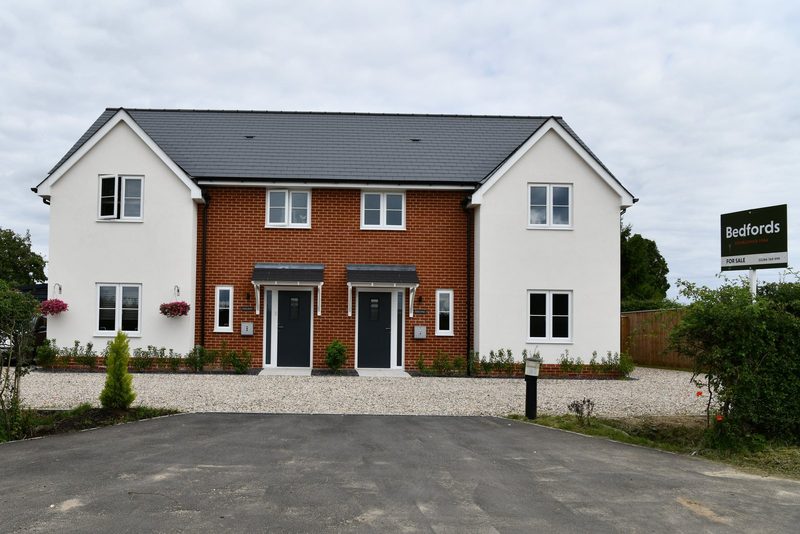
Wide-angle lenses, staging and a sunny afternoon add tens of thousands of dollars to a listing's apparent value, and the gap closes the moment you walk in. Note what the photos skipped: the roof, the electrical panel, the yard's slope, the neighbor's wall. Then ask for the seller's disclosures before you offer, even where the law only requires delivery later. In California the seller's disclosures about the property go on the Real Estate Transfer Disclosure Statement, the form prescribed by Civil Code § 1102.69, and a second form, the Natural Hazard Disclosure Statement under § 1103.2, states whether the lot sits in a FEMA special flood hazard area, a high or very high fire hazard severity zone, an earthquake fault or seismic hazard zone or a dam inundation area10; the flood zone by address guide shows how to read the FEMA map yourself before either form arrives. Two more location checks belong in this pass and cost nothing: the official crime statistics for the area, read the way the crime rate by address guide describes, and the modeled noise level at the address, which the road noise and property value guide shows how to look up.
Everything you find here is either a price adjustment or a contingency. A roof at the end of its life is a number to subtract from the comps' indicated value, in writing, in the offer. An unpermitted garage conversion is a question for the building department and an inspection item. This is general information, not legal or tax advice.
Building the offer: anchor, walk-away number, escalation clause, contingencies
Anchor. Your opening number should sit inside the range the adjusted comparables support, toward its lower end when tempo is slow and toward its upper end when the house is fresh and showing well. An anchor below the range invites a rejection without a counter; an anchor at the ask ends the negotiation before it starts.
Walk-away number. Decide the highest price you will pay before you write anything, and derive it from two figures: the top of the indicated range, and the monthly payment you can carry. At 7.03 percent over 30 years, every $10,000 of borrowed price adds about $67 a month in principal and interest (computed on the survey rate8). A $30,000 stretch is $200 a month for three decades.
Escalation clause. In a competitive situation, an escalation clause raises your offer automatically above a competing bona fide offer by a set increment up to a cap. Set the cap at your walk-away number, require proof of the competing offer, and remember that the clause reveals your maximum to the seller.
Contingencies. Inspection, financing and appraisal contingencies let you leave the contract if the house, the loan or the lender's value falls short. The appraisal contingency matters most when you offer above the range: if the appraiser's three comparables1 do not reach your price, the lender lends on the lower figure and you either cover the gap in cash or renegotiate. Earnest money and a short inspection period make an offer stronger without adding a dollar to the price.
A $749,000 Los Angeles bungalow tested against a $700,000 to $735,000 range
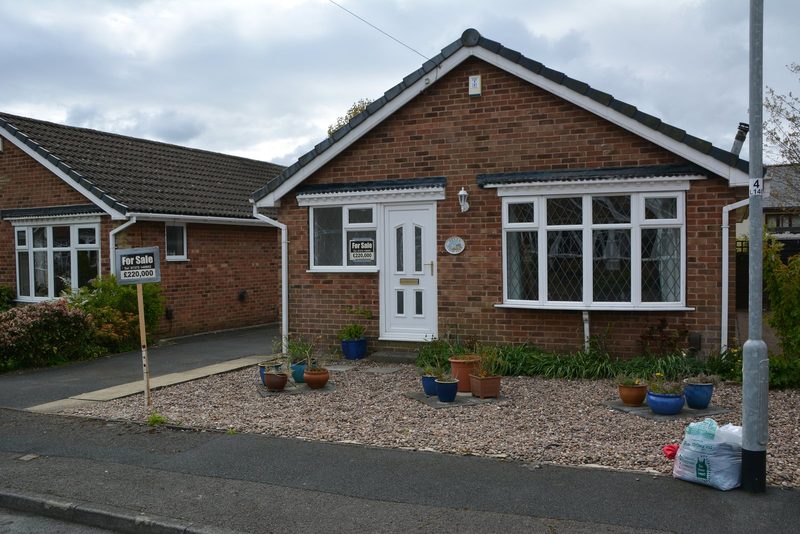
A hypothetical example with invented figures. A two-bedroom, one-bath bungalow of 1,050 square feet, built in 1948, on an interior street in the eastern San Gabriel Valley of Los Angeles County, listed at $749,000 after one cut from $775,000, 74 days on the market. Average condition, original kitchen, detached one-car garage. The county's median single-family price stood at $946,950 in the same month4; this is a starter house well below it.
| Comparable, closed | Sale price | Size and features | Adjustments to the subject | Adjusted price | Raw $/sq ft |
|---|---|---|---|---|---|
| A, three months ago, four blocks away | $712,000 | 1,020 sq ft, 2/1, average | +$3,000 size | $715,000 | $698 |
| B, five months ago, same tract | $758,000 | 1,100 sq ft, 2/1, remodeled kitchen and bath | −$5,000 size, −$20,000 updates | $733,000 | $689 |
| C, nine months ago, next tract | $685,000 | 980 sq ft, 2/1, deferred maintenance | +$7,000 size, +$10,000 condition | $702,000 | $699 |
The five checks, in order. Comps: the adjusted prices cluster between $702,000 and $733,000, so the indicated range is $700,000 to $735,000 and the ask of $749,000 is 2 percent above the top and 7 percent above the bottom. Price per square foot: the listing asks $713 against $689 to $699 for the three sales. Days on market: 74 against a national median of 602, and the local ZIP code median, pulled from Realtor.com's files5, is 45 in this example. Price cuts: one, of 3.4 percent, in a month when a fifth of US listings were cutting2. Sale-to-list: the agent's MLS report for the ZIP code shows closed sales at 97 percent of final list in the example.
The offer: anchor $705,000, walk-away $730,000, a 12-day inspection period, financing and appraisal contingencies, earnest money of 3 percent. The cover letter states the three sales, the adjusted range and the tempo in four sentences. Two things the buyer does not do: offer "5 percent under asking" ($711,550), which would credit the seller's optimism; or pay the ask because the house is charming, which with 20 percent down and a 7.03 percent loan8 would add about $235 a month to the payment, against the anchor, for 30 years.
The value range and market tempo that go into the offer letter
CheckValue produces an AI valuation report for one address, and for a buyer its use is narrow and specific: in about two minutes it delivers the parts of the five checks that take an afternoon by hand. The value range with its point estimate is check one in written form, resting on comparable sales the report lists with their adjustments. Price per square foot compared with the district average is check two. The market tempo, the report's estimate of time to sell in the area, is the local half of check three, the piece a national median cannot give you. Because identical inputs for an address return an identical result, the range you attach to your offer is the same range the seller's agent would get by running it, which makes it hard to dismiss as a buyer's wishful number.
What it is not: an appraisal, an inspection or a forecast of how many other buyers will bid this week. It does not look inside the house, and the lender will still order its own appraisal. Enter the listing's facts as advertised and check the value range and market tempo for the listing address in the preview before you decide whether to buy the full report; the sample reports include a completed Los Angeles report with the range, the comparables and the tempo section.
When to walk away
- The seller counters above the top of the indicated range and the tempo says other buyers are not lining up27: let the listing age.
- The appraisal comes in below the contract price and the seller refuses to meet it: the lender has just told you the comps' verdict1.
- The disclosures910 or the inspection turn up work you cannot price with confidence: a foundation, a slope, a title issue.
- The monthly payment only works if you refinance later; at 7.03 percent8 that is a bet, not a plan.
- You have started explaining to yourself why this house is the exception to the comps.
The offers I regret writing for clients in Austria and Tenerife were never the low ones that got rejected. They were the ones we wrote at the asking price because the buyer had already moved in emotionally, and the three sales that would have saved them a year of payments were sitting in a drawer nobody opened.
Frequently asked questions
How do I know if a house is overpriced?
Run the appraiser's test: take three similar homes that closed in the past year, adjust each for size, condition and features, and see whether the ask sits above the cluster they form. If it does, the house is overpriced. Confirm with the price per square foot against the district, the listing's days on market and price cuts against the local median, and the ZIP code's sale-to-list ratio. A cited value range for the address puts that evidence in writing.
How much below asking price should I offer on a house?
Not a percentage off the ask; a position inside the range that the comparable sales support. Tempo tells you where inside it: the median US listing sat 60 days in August 2026, one in five had cut its price and active inventory was 3.6 percent higher than a year earlier, all of which widen the room to negotiate. Write down a walk-away number before the offer goes out and keep to it.
Are houses selling for asking price right now?
That depends on the ZIP code, not the country. The national median list price was $424,500 in August 2026, 1.3 percent below a year earlier, and pending sales were 4.7 percent lower than in August 2025, which says most sellers are accepting less than they hoped. Supply-starved micro-markets still clear above the ask. Ask an agent for the local sale-to-list ratio, the closed price divided by the final list price.
How much over asking price are houses going for in 2026?
In most places, nothing: list prices had fallen year over year for ten straight months through August 2026 and a fifth of active listings carried a price cut. Where competition survives, usually well-priced homes in neighborhoods with almost no inventory, paying above the ask can be right, but only if three adjusted comparables reach the number, and only with an appraisal contingency or the cash to cover a gap.
How do I know if I'm overpaying for a house?
You are overpaying when your price exceeds what three adjusted comparable sales support, whatever the ask was. A second warning is a payment that only works if rates fall: at the 7.03 percent Freddie Mac reported for September 24, 2026, each extra $10,000 you borrow adds about $67 a month over 30 years. A third is an appraisal below the contract price, the lender repeating what the comps said.
What is a reasonable offer on a $500k house?
There is no reasonable percentage, only a reasonable price: what three adjusted comparable sales and the tempo of that street support. If the comps cluster between $470,000 and $485,000 and the listing has sat past the local median with a price cut, anchor near $470,000 and walk away at $485,000. If the comps reach $500,000 and the house is a week old with steady showings, offering below the ask may simply lose it.
Why is the house listed for more than the online estimate?
Because both figures are opinions and neither is a sale. The list price comes from the seller and the agent, and the REALTOR® Code of Ethics only bars an agent from deliberately misleading the owner about market value to win the listing; optimism is allowed. An online estimate is a model output with a published error rate, widest for homes that have not been listed. Decide with closed comparables and the listing's own price history.
This article is general information, not legal, tax or investment advice. Figures and rules carry the year they were published; check the cited source for the current version.

Christian Eckmair is co-founder of CheckValue and of CBDNOL GmbH (Ansfelden, Austria). He has worked in real estate for more than 20 years in Tenerife and Austria – buying, renovating, letting and selling residential property – and writes about home values, buying checks and ownership records.
Articles by Christian Eckmair →Sources
- 1guidanceSelling Guide B4-1.3-08, Comparable SalesFannie Mae · 2026A minimum of three closed comparables must be reported; comparable sales that have closed within the last 12 months should be used; contract offerings and current listings may serve as supporting data but do not satisfy the minimum.selling-guide.fanniemae.com ↗
- 2statisticsRealtor.com Research: housing data and market trends (monthly listing and rent figures)Realtor.com · 2026The August 2026 monthly housing report: median list price $424,500 (down 1.0 percent from July and 1.3 percent from a year earlier, the tenth straight monthly year-over-year decline), median list price per square foot $224 (down 1.8 percent), median 60 days on market, 20.4 percent of listings with a price cut, active listings 1,140,000 (up 3.6 percent), new listings 401,760.realtor.com ↗
- 3guidance2026 Code of Ethics & Standards of Practice (Standards of Practice 1-3 and 11-1)National Association of REALTORS® · 2026Effective January 1, 2026. SOP 1-3: REALTORS®, in attempting to secure a listing, shall not deliberately mislead the owner as to market value. SOP 11-1: an opinion of value or price outside a listing or purchase must state its basis, the date, the value defined, any physical inspection and any interest in the property.nar.realtor ↗
- 4statisticsCurrent Sales & Price Statistics: county and regional median pricesCalifornia Association of REALTORS® · 2026August 2026 medians for existing single-family homes: Los Angeles County $946,950 (up 1.7 percent year over year), Los Angeles Metro Area $850,000 (up 1.2 percent), California $901,420 (up 0.1 percent).car.org ↗
- 5statisticsRealtor.com Real Estate Data: metric definitions and downloadable seriesRealtor.com · 2026Definitions of median days on market (time between initial listing and closing or removal), median list price per square foot and price decrease count, with monthly files down to ZIP code level.realtor.com ↗
- 6statisticsRedfin Data Center: downloadable housing market dataRedfin · 2026Downloadable market data and dashboards, including Price Drops (how much sellers are lowering prices) and Balance of Power: Buyers and Sellers (whether negotiating power lies with buyers or sellers), updated monthly.redfin.com ↗
- 7statisticsPending Home Sales IndexNational Association of REALTORS® · 2026August 2026 release (September 17, 2026): pending home sales rose 0.3 percent from July and fell 4.7 percent from a year earlier, with year-over-year declines in all four regions.nar.realtor ↗
- 8statisticsPrimary Mortgage Market Survey (PMMS): weekly mortgage ratesFreddie Mac · 2026The 30-year fixed-rate mortgage averaged 7.03 percent in the week of September 24, 2026, up from 6.95 percent the week before and 6.30 percent a year earlier; the 15-year averaged 6.42 percent.freddiemac.com ↗
- 9lawCalifornia Civil Code § 1102.6: Real Estate Transfer Disclosure StatementCalifornia Legislative Information · 2026Section 1102.6 prescribes the Real Estate Transfer Disclosure Statement, the statutory form on which California sellers of residential property must make the disclosures required by Civil Code Article 1.5; the full text of the form is printed in the statute book (Statutes of 2020, Chapter 370).leginfo.legislature.ca.gov ↗
- 10lawCalifornia Civil Code § 1103.2: Natural Hazard Disclosure StatementCalifornia Legislative Information · 2026The statutory Natural Hazard Disclosure Statement on which the seller and the seller's agent state whether the property lies in a FEMA special flood hazard area (Zone A or V), an area of potential flooding on a dam failure inundation map, a high or very high fire hazard severity zone, a wildland fire area, an earthquake fault zone or a seismic hazard zone.leginfo.legislature.ca.gov ↗