CheckValue
You typed your own address into a search engine and the result felt like a violation: a page about your house, with a value on it, your name underneath and in some cases a list of the people who live there. Nobody asked you. There is no button that says "this is my home, take it down". This page sorts out which part of that picture came from where, what each holder is willing to remove, and which requests actually work. If your starting question is who owns a given parcel, the guide to looking up a property owner covers the search itself.
Where the name and the value on your screen came from
Three layers stack up on every US address, and they behave completely differently when you ask for a deletion.
| Layer | Who holds it | What it shows | Removal on request |
|---|---|---|---|
| County record | Assessor or appraisal district, recorder or county clerk | Deed, grantee names, sale date, parcel characteristics, tax value | Almost never, except for named protected groups4 |
| Map estimate | A portal running a valuation model | A figure for your address, usually with a range and a chart | Suppression of the estimate is the most you can ask for; the record underneath stays |
| People-search profile | Data brokers2 | Your name, past addresses, phone, age, relatives, household guesses | Yes, and in California through one request to all registered brokers1 |
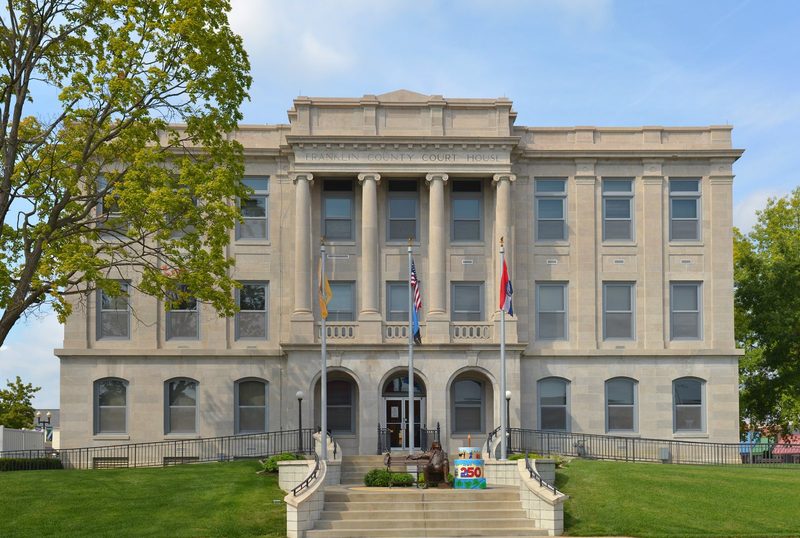
The county layer is the oldest and the most open. Los Angeles County's recorder puts it plainly: any member of the public can search and request real estate records, and the county's files reach back to 18503. That office has gone further than most in one respect: it offers no online access to its records or indexes at all, because California's Government Code bars publishing the home address of an elected or appointed official on the internet without written permission, and the recorder cannot tell which names in the stack belong to such a person3. The deeds are still public. You just have to ask for them by name.
What the deed does not contain is a household list. That part came from the layer above, and the article on property records shows exactly which fields the county does and does not keep.
Why a site posts the names of everyone who lives in the house
Because the deed is only the seed. California's privacy regulator defines a data broker as a business that collects personal information about consumers from a range of sources and sells it to other companies even though the consumer never dealt with it, and it names the kind of material in play: social security numbers, precise geolocation, health-related information and browsing history2. Add the county's grantee names to that pile and a profile builds itself: an owner, an address, a phone number, relatives, former addresses, the adult who once received mail at the house.
Two consequences follow. The household list is an inference, not a record, which is why these pages so often name a long-departed tenant or an ex-spouse as a current resident. And because the profile is assembled commercially, it is also deletable commercially. That is the opposite of the county layer, where accuracy is defended and deletion is refused.
Why the site will not hide your home when you ask
The three holders say no for three different reasons, and knowing which one you are talking to saves weeks.
The county says no because the law tells it to publish. Recording a deed is how ownership becomes effective against the world, and an assessment roll has to be inspectable for tax appeals to mean anything. An owner's discomfort is not a listed ground for withdrawal3.
The portal says no because an address without a page is an address without traffic. A model estimate for every parcel is what makes such a site findable, and the figure is produced from the same public records you already saw. Asking for your estimate to be suppressed is a reasonable request to put in writing, and some sites honor it for a verified owner. What no portal can do is delete the county record beneath it.
The broker says no until you use the right channel. A support email often goes nowhere; the statutory route works. In California the state regulator keeps a registry of the businesses that operated as data brokers, who must register each January, and residents can file a single deletion request through the Delete Request and Opt-Out Platform instead of hunting down forms one site at a time2. Brokers had to start processing those requests on 1 August 2026 and must look at the platform at least once every 45 days1.
Professionals who work with owner data for a living run into the same boundary from the other side; the rules for owner lookups by agents and investors set out what is permitted use and what is not.
How to get your address off the resale layer, step by step
- Separate the searches. Search your address alone, then your name alone. Address-only hits are usually the county layer or a portal page. Name plus address hits are brokers, and those are the ones worth your time.
- Use the statutory channel if your state has one. California residents submit one verifiable request through DROP, and every registered broker must act on it within its 45-day cycle1. Check the public registry to see who is covered2.
- File individual opt-outs elsewhere. Without a state platform, each site's own privacy form is the route. Keep a dated list: site, date sent, confirmation, result after 30 days.
- Ask the portal in writing to suppress the estimate for your address, and say plainly that you are the owner of record. Treat a refusal as a fact about the portal, not about the county.
- Re-check after 90 days. Brokers refresh from the same public sources, so a profile can reappear after the next county update. A calendar reminder beats indignation.
- Do not pay for a removal service before you have tried the statutory channel; in California one DROP request reaches every registered broker1.
What the county can and cannot take out of the record
Some states carve out named groups rather than offering privacy to everyone. Texas is the clearest example: a qualified owner files the comptroller's confidentiality form with the appraisal district in each county where the property lies, and the appraisal records then stop showing information that identifies that individual's home address4. The form lists 33 numbered qualifying categories, running from participants in the attorney general's address confidentiality program and armed-forces members who served in a designated combat area, through county jailers, court administration staff, district attorneys and their employees, elected public officers, peace officers and their spouses, firefighters and emergency medical services personnel, to victims of family violence, who attach a protective order or other documentary evidence4. State and federal judges do not file at all; the Office of Court Administration notifies the appraisal district when a judge qualifies4. The election lasts until the individual rescinds it in writing, and it does not suppress information about the property itself when that information does not identify the protected owner4.
If your reason is safety rather than annoyance, the second instrument is an address confidentiality program. California's Safe at Home gives survivors of domestic violence, sexual assault, stalking, human trafficking, child abduction and elder or dependent adult abuse, along with reproductive and gender-affirming health care providers and patients and public employees who fear for their safety, a substitute mailing address that receives first class, certified and registered mail, and lets participants register as confidential voters5. It shapes what you disclose from now on. It does not reach backward into a deed recorded in 2014.
Enrolling in a confidentiality program after the purchase does not remove the old record, and a holding company bought for privacy creates its own paperwork; the guide to LLC-owned and trust-owned homes explains what a corporate owner reveals and conceals. Deadlines, eligible categories and forms differ in every state, so check with your own appraisal district, assessor or clerk before you rely on any of this. This is general information, not legal or tax advice.
Is there an identity theft risk because my address is online?
The published value is not what puts a house at risk. An unwatched record is.
The New York Attorney General's office describes two forms of deed theft: forgery, where a thief fakes the owner's signature on a deed and files it with the county clerk, and fraud, where an owner is talked into signing the deed over without understanding what the document does6. The properties named as usual targets are the quiet ones: abandoned or empty homes, properties in foreclosure, parcels carrying tax or utility liens, and homes whose owner died years ago and whose heirs never transferred title6. None of those vulnerabilities is created by a value on a map.
The countermeasures are correspondingly practical. Check your own property record once a year, contact the county clerk if anything looks wrong, sign up for a recorded-document notification service where your county runs one, never sign a transfer without your own lawyer, and keep mortgage, tax and utility payments current so your parcel never shows up on a list of distressed addresses6. This is general information, not legal or tax advice.
Example: one house, three published numbers
Take a hypothetical case, not a real address. A couple bought a single-family home in a West Coast metro in April 2025 for $505,000. Searching their own address in 2026 turned up three figures and their names.
| What they found | Figure | What it actually is |
|---|---|---|
| Appraisal district roll | $462,000 | A tax value, set in bulk for a tax year, with their names printed next to it |
| Portal map estimate | $548,000 | A model output for an address page, revised whenever the model is |
| Purchase price grown by the official index | about $515,600 | $505,000 plus the 2.1 percent the FHFA index rose from the second quarter of 2025 to the second quarter of 20268 |
The spread between the lowest and the highest of those numbers is $86,000 on one house. The index check is the sober one, and for their own census division it would be even flatter: the Pacific division came in slowest of the nine, barely above zero over the same four quarters8. So the number that upset them, the $548,000 on the public map, was a guess about their property that strangers could see, and it was wrong by tens of thousands in either direction depending on which anchor you trust.
Their removal work took six weeks and had nothing to do with the value. They filed one state deletion request covering the registered brokers1, sent four individual opt-outs to sites outside that scope, asked the portal in writing to suppress the estimate, and signed up for notification of any document recorded against their parcel6. The county record stayed exactly where it was, because it is supposed to.
More than twenty years around property registers in Austria and on Tenerife taught me that a register never forgets. What an owner can still steer is who learns their name next week, not who learned it a decade ago, and that is where the work pays off.
What CheckValue publishes, and what it refuses to publish
This site sells a report, not an audience, so there is nothing for us to publish about your house.
There is no value map, no address directory and no owner index anywhere on CheckValue. A valuation exists only after a customer orders one for a specific address; before that moment, nothing about the property has been calculated. The finished report lives in that customer's account and in the PDF they download, and it reaches anyone else only if the buyer sends them the share link. Nobody is told that the report was ordered, and no agent is introduced. The free preview shows the layout with sample figures before any payment, which is also the point at which you can see exactly which sections exist.
For US addresses the report carries an owner-of-record section built from public county files: owner type, the date of the last sale, the mailing city. It repeats what the county already publishes and nothing more. That data may not be used for credit, employment, insurance or tenant-screening decisions, because the Fair Credit Reporting Act lists the purposes for which a consumer reporting agency may furnish a consumer report and no others, and CheckValue is not a consumer reporting agency7.
What this report cannot do for you: it cannot remove a deed, change an assessment roll, suppress another company's estimate or delete a broker profile. Those requests go to the county, the portal and the brokers, by the routes above. Which official source stands behind each section of the report is listed on the help pages.
If the search that brought you here was really about the figure rather than the exposure, a report ordered by you, visible to you, with its sources printed beside each number, is the version of your home's value that nobody else gets to see.
Frequently asked questions
Why can everyone see my home's value and my name online?
Because three different layers sit on top of one address. The county holds the deed, the owner name and a tax value as public records that anyone may search. A portal paints a model estimate over those records so that every address has a page. A people-search company buys both, adds marketing data and sells the profile. Nobody leaked anything; the first layer was always open.
How do I get my property removed from a home value website?
Write to the site and ask for the estimate on your address to be suppressed, then deal with the resellers separately. California residents can send one deletion request through the state's DROP platform, which every registered data broker must process; brokers began handling those requests on 1 August 2026 and check the platform at least every 45 days. Outside California you file an opt-out with each site.
Does a property site post the names of everyone who lives in the house?
The deed names only the people who signed it, so a household list did not come from the county. It comes from a data broker, a business that gathers personal information from many sources and sells it on to companies you never dealt with. Those household guesses are often wrong, which is a reason to correct or delete the profile rather than ignore it.
Can I have my name taken off the county's property record?
Normally no. Recorded deeds and assessment rolls are public, and a county cannot unpublish them because an owner dislikes the exposure. Some states carve out named groups: Texas lets peace officers, county jailers, family-violence victims, armed-forces members and further categories on the comptroller's list of 33 restrict public access to their home address in appraisal records with the comptroller's confidentiality form, and the election lasts until it is withdrawn in writing. State and federal judges do not file at all, because the Office of Court Administration notifies the appraisal district for them.
Is there an identity theft risk because my address and value are online?
The published value is not the risk; an unwatched record is. The New York Attorney General describes deed theft, where a forged deed is filed with the county clerk or an owner is tricked into signing, and names the usual targets: empty homes, properties in foreclosure, parcels with tax or utility liens and homes whose deceased owner's heirs never transferred title. Checking your record yearly is the countermeasure.
What can I do if my address has to stay private for safety reasons?
Use the state program built for it. California's Safe at Home gives survivors of domestic violence, stalking, trafficking and other qualifying applicants a substitute mailing address for first class, certified and registered mail, plus confidential voter registration. It governs what you hand over from now on; it does not rewrite deeds already recorded, so pair it with a county confidentiality election where your state offers one.
Can I find out who looked up my property?
Generally no. County access is open to any member of the public, as the Los Angeles County recorder states of its own real estate records, and such an office exists to hand out documents rather than to report who asked for them. Portals and data brokers log visits for their own analytics and do not disclose them to owners. Where a records request has to be filed in writing, that request may itself be a public document in some states, so ask your clerk. The useful alert runs the other way: some counties notify an owner whenever a document is recorded against the parcel.
Does CheckValue publish my home's value or my name anywhere?
No. There is no value map and no owner directory on the site. A report is produced only when somebody orders it for an address, and it stays in that account unless the buyer shares the link. For US addresses the report includes an owner-of-record section taken from public county files, and that data may not be used for credit, employment, insurance or tenant-screening decisions.
This article is general information, not legal, tax or investment advice. Figures and rules carry the year they were published; check the cited source for the current version.

Josef Eckmair MBA is co-founder of CheckValue (CBDNOL GmbH, Ansfelden, Austria). He has more than 20 years of real estate experience in Tenerife and Austria and writes about appraisals, taxes, selling costs and valuations for professionals.
Articles by Josef Eckmair →Follow: RSS · Feedly · Add as a preferred source on Google
Sources
- 1officialDelete Request and Opt-Out Platform (DROP)California Privacy Protection Agency (CalPrivacy) · 2026DROP lets a consumer direct every data broker, through a single verifiable request, to delete their personal information; beginning 1 August 2026 data brokers must access the deletion mechanism at least once every 45 days and process the requests they find.cppa.ca.gov ↗
- 2officialCalifornia Data Broker RegistryCalifornia Privacy Protection Agency (CalPrivacy) · 2026Defines a data broker as a business that collects personal information about consumers from various sources and sells it to other companies even though the consumer never interacted with it; registration runs annually from 1 to 31 January, California residents may use DROP from 1 January 2026, and data brokers had to begin processing those requests on 1 August 2026.cppa.ca.gov ↗
- 3officialReal Estate Records: General InformationLos Angeles County Registrar-Recorder/County Clerk · 2026Any member of the public can search and request real estate records, available for Los Angeles County since 1850; the office provides no online access to the records or indexes because Government Code section 6254.21 forbids posting the home address of any elected or appointed official online without written permission and the office cannot identify those individuals in the records.lavote.gov ↗
- 4officialForm 50-284, Request for Confidentiality Under Tax Code Section 25.025Texas Comptroller of Public Accounts, Property Tax Assistance Division · 2025Qualified owners elect to restrict public access to their home address in appraisal records; the form lists 33 numbered qualifying categories (address confidentiality program participants, armed forces members, county jailers, court administration staff, elected public officers, family-violence victims, federal and state judges, peace officers, firefighters and emergency medical services personnel among them), is filed with the appraisal district in each county where the property lies, stays in effect until rescinded in writing, and does not bar disclosure of information that does not identify the qualified individual.comptroller.texas.gov ↗
- 5officialSafe at Home: California's address confidentiality programCalifornia Secretary of State · 2026Offers a substitute mailing address for first class, certified and registered mail to victims of domestic violence, sexual assault, stalking, human trafficking, child abduction and elder or dependent adult abuse, to reproductive and gender-affirming health care providers and patients and to public employees who fear for their safety; participants may also register as confidential voters.sos.ca.gov ↗
- 6guidanceDeed theft: protect your homeOffice of the New York State Attorney General · 2026Deed theft happens by forgery, where a signature is faked and the deed filed with the county clerk, or by fraud, where an owner signs the deed over without realizing; the targets named are abandoned or empty properties, homes in foreclosure, parcels with tax or utility liens and homes whose deceased owner's heirs never transferred title. The office advises checking property records yearly, contacting the county clerk and using the recorded-document notification service in New York City.ag.ny.gov ↗
- 7law15 U.S.C. § 1681b, Permissible purposes of consumer reports (Fair Credit Reporting Act)Legal Information Institute, Cornell Law School · 2026A consumer reporting agency may furnish a consumer report only in the circumstances listed in subsection (a) and no other: a court order or grand jury subpoena, the consumer's written instructions, a credit transaction, employment purposes, insurance underwriting, eligibility for a government license or benefit, or another listed legitimate business need.law.cornell.edu ↗
- 8statisticsU.S. House Prices Rise 2.1 Percent Year over Year; Up 0.3 percent Quarter over QuarterFederal Housing Finance Agency (FHFA) · 2026Release of 25 August 2026: US house prices rose 2.1 percent between the second quarter of 2025 and the second quarter of 2026 and 0.3 percent over the previous quarter; prices rose in 46 states, and of the nine census divisions the Pacific recorded the slowest appreciation, slightly above 0.0 percent.fhfa.gov ↗